Okay so if you’ve been on Netflix lately you’ve probably seen a show called Mousetrap trending. Generic thriller title, right? Could be anything. You’d have no idea.
But in Korean, the title is 들쥐 (Deulchwi) — field mouse. And that word means something completely different to a Korean audience. It’s not just a mouse. It’s a reference to a folktale every Korean kid heard growing up. The moment Koreans saw that title, they felt it. The English title “Mousetrap” gives you nothing of that. It’s just a word.
That gap is what this post is about.
First — What Does 들쥐 Even Mean?
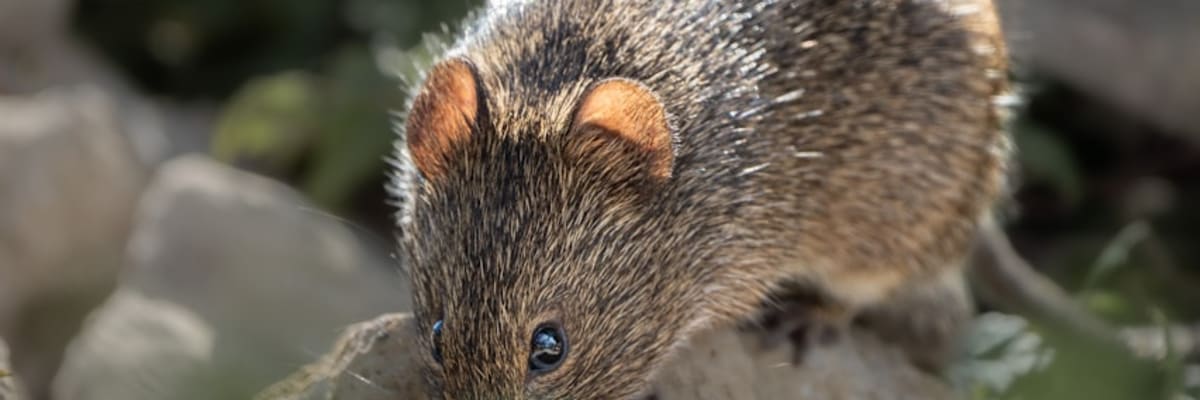
들쥐 (deulchwi) is a field mouse. Not a house mouse — a wild one that lives in the fields and countryside. Small, unremarkable, the kind of creature you’d barely notice.
Which is exactly the point.
The title isn’t random. It’s a direct reference to one of Korea’s most well-known 전래동화 (jeonrae donghwa — traditional folktales). The kind of story Korean parents told their kids before bed, the kind that gets read in elementary school. Ask any Korean in their 20s, 30s, or 40s if they know the story of 손톱 먹은 들쥐 — the field mouse that ate fingernails — and they’ll immediately know what you’re talking about.
The Folktale: 손톱 먹은 들쥐
The story goes like this.
A person — in most versions, a young man — cuts their fingernails and leaves the clippings on the ground without disposing of them properly. A field mouse comes along, finds the clippings, and eats them.
And that’s when things go wrong.
By eating the fingernails of a human, the mouse absorbs that person’s identity. It transforms — not just in appearance, but in every way — into a perfect copy of that person. It walks into the person’s home. It knows the family. It knows the name. It knows the life. From the outside, there’s no way to tell the difference.
The real person comes back and suddenly there are two identical people standing in the same house. The family doesn’t know which one is real. The impersonator behaves exactly right, says all the right things. The real person insists they’re the real one, but so does the mouse.
The way the truth is eventually revealed depends on the version — sometimes it’s a clever test, sometimes a government official figures it out, sometimes the mouse eventually slips up. But the core idea is always the same: something small and overlooked consumed a piece of you, and used it to take your place.
Why Korean Kids Were Told This Story
This folktale wasn’t just entertainment. It explained a real superstition that older Koreans still follow:
Never leave your nail clippings lying around. Especially not at night.
The traditional belief was that if an animal — particularly a rat or mouse — ate your fingernail clippings, it could take on your form. So nail clippings were supposed to be carefully collected and either burned or thrown away somewhere safe. Not left on the floor. Not left outside.
A lot of older Korean households had this practice. Some people still do. You might see a Korean grandmother sweep up after someone clips their nails with a kind of urgency that seems disproportionate until you know the story behind it.
It’s the same logic behind a lot of Korean folk belief: parts of your body — hair, nails, even your name said in certain ways — carry a piece of you. Leave them careless and something can use them against you.
That last line — “믿는다기보다 그냥 찜찜하잖아” — is very Korean. It’s not quite belief, it’s not quite superstition. It’s just a feeling. Something you can’t completely shake even when you know it’s folklore.
What the Folktale Is Really About
The core lesson is this: 아무리 작고 사소한 것이라도 함부로 하지 마라. Even the smallest, most trivial thing should be handled with care.
손톱 한 조각. One nail clipping. Something you’d throw away without a second thought. That’s what starts the whole disaster. Not a big mistake — a tiny, careless one.
Korean 전래동화 are rooted in Confucian values, and this one is no different. Your body was given to you by your parents — every part of it, down to your nails — and treating it carelessly is a form of disrespect. The traditional value of 효 (hyo / 孝), filial piety, extends all the way to how you handle what comes off your body. This is why Korean grandmothers still sweep up nail clippings with a kind of urgency that seems out of proportion — until you know the story behind it.
The deeper implication: if you’re sloppy with the small things, you lose the big things. The real person didn’t lose their identity through some dramatic event. They lost it through a moment of everyday carelessness that they didn’t think mattered.
That’s the lesson Korean parents were teaching their kids. Not just “dispose of your nail clippings properly” as a superstition — but a broader habit of mind: small actions matter. Even the ones nobody’s watching.
Some literary readings of the folktale add more layers — the reversal of host and guest (주객전도), a warning against laziness in life. Those interpretations are interesting. But the original weight of the story, the reason it survived for generations as a bedtime tale, is simpler: be careful. Be diligent. Even about the small things. Especially about the small things.
So What’s the Drama About?
Without getting into spoilers: 들쥐 (Mousetrap on Netflix) takes that core concept and runs with it in a very modern direction. The themes of identity, impersonation, and the terror of being replaced by something that looks exactly like you — that’s all directly from the folktale DNA.
And here’s the thing: Korean viewers felt all of that from the title alone. Two syllables. 들쥐. Before they watched a single episode, they already knew the emotional territory the show was entering.
International viewers got “Mousetrap.” Which is fine as a thriller title. But it’s a completely neutral word — no folklore attached, no childhood memory triggered, no cultural weight. You’d think it was about a trap. You wouldn’t think it was about a child’s bedtime story that generations of Korean parents told to teach their kids to be careful.
If you’re watching the drama and you don’t have that context, it’s still a good show. But knowing the folktale adds a layer that Korean audiences got automatically — every scene where a character doesn’t know who to trust, every moment of “which one is real,” there’s a story underneath it that Koreans grew up hearing.
That’s the thing about Korean content built on 전래동화. The folktale isn’t just backstory. It’s already in the title.
손톱은 함부로 버리지 마라. 들쥐가 먹는다.
(Don’t carelessly throw away your nail clippings. A field mouse might eat them.)