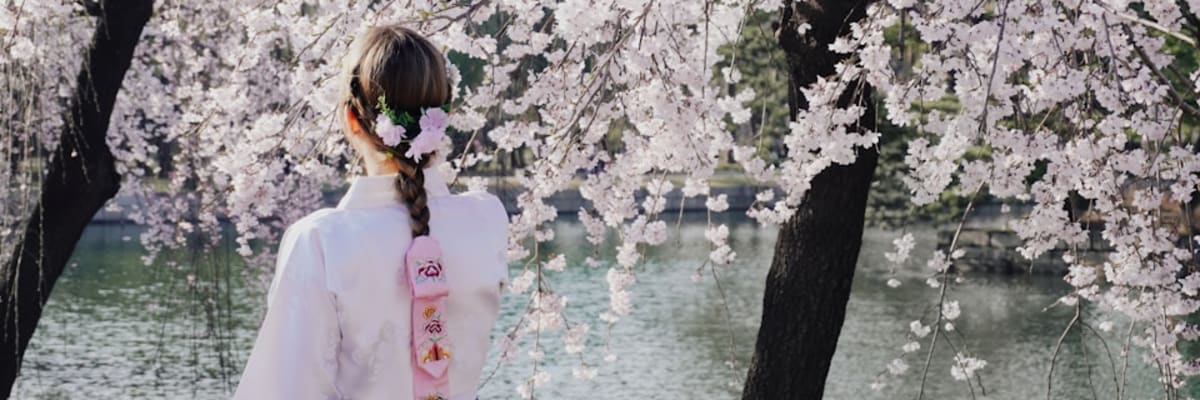
Okay so if you were anywhere near the internet on Met Gala night, you already saw it. Karina from aespa walked the 2026 Met Gala red carpet in custom Prada — a white satin dress with a black cape — and the fashion world collectively stopped breathing for a second. The look pulled from Prada archive details going back to 2007 and 2017, but the detail everyone started talking about? The neckline. It’s called a tablier neckline, and it was directly inspired by the Korean 한복 (hanbok). On one of the biggest fashion stages in the world, a Korean girl group member wore a piece that nodded to traditional Korean dress — and it looked stunning. It made a lot of people ask: okay but what actually IS hanbok? And do Koreans even wear it anymore? Yes. Just not in the way you probably imagine.
What Is Hanbok, Really?
한복 (hanbok) is Korea’s traditional clothing. For women, the classic look is a 저고리 (jeogori) — a short jacket with long sleeves — paired with a 치마 (chima), a full, high-waisted skirt that kind of floats when you walk. Men wear a jeogori with 바지 (baji), wide-legged trousers.
The colors are what people always notice first. Soft pinks, deep navy, sage green, bright red. The fabric catches light differently depending on how you move. There’s a reason it photographs so well — it was designed to look good in motion, not just standing still.
Modern hanbok has evolved a lot. You’ve got the traditional version that’s heavy and structured, the lighter 생활한복 (saenghwal hanbok — “everyday hanbok”) that’s more relaxed and wearable, and then the fashion-forward, idol-worn interpretations like what Karina had on. They’re all hanbok, just at different points on the spectrum.
But here’s the thing nobody outside Korea fully understands: hanbok isn’t dead. It’s just… occasion-specific.
When Real Koreans Actually Wear Hanbok
This is the real answer to the question. Koreans don’t wear hanbok to work or to grab coffee. But there are very specific moments when it comes out — and those moments matter.
설날 and 추석 (Seollal and Chuseok) — The Big Two
These are the two biggest holidays in Korea. 설날 (Seollal) is Lunar New Year, and 추석 (Chuseok) falls in autumn. Both involve going to your family’s hometown, doing ancestral rites called 차례 (charye), and eating a lot.
On these days, especially for the charye ceremony, many families still wear hanbok. Not everyone — plenty of families have dropped the tradition — but it’s still common enough that stores sell holiday hanbok sets every year and you’ll see families dressed up in it on these days.
The kids especially. Putting a toddler in a tiny hanbok for Seollal is basically a Korean rite of passage. My baby wore one last Seollal and I took about 400 photos.
돌잔치 (Doljanchi) — The First Birthday Party
This is the one where hanbok is basically required. A 돌잔치 is a baby’s first birthday party, and it’s a big deal in Korean culture — historically because making it to one year old used to be a real achievement. These days it’s a full celebration with family, food, and the famous 돌잡이 (doljabi), where the baby picks an object from a spread and everyone interprets what their future will be like.
The baby wears hanbok. The parents often wear hanbok. Grandparents sometimes do too. It’s one of the few occasions where wearing it doesn’t feel out of place — it feels right.
결혼식 (Weddings)
Traditional Korean weddings — 전통 혼례 (jeontong honrye) — are done entirely in hanbok. But even at modern Korean weddings, which mostly follow a Western format, you’ll often see the hanbok ceremony happening either before or after the main event. The bride and groom change into hanbok for the 폐백 (pyebaek) — a private ceremony where they bow to the groom’s family and receive blessings.
Guests at weddings usually wear regular formal clothes, but the families of the couple sometimes wear hanbok too, especially the older generation.
The Modern Hanbok Moment: Palace Photo Shoots
Okay, this one isn’t a traditional occasion — it’s something that got genuinely popular over the last decade and now feels like its own tradition.
If you go to 경복궁 (Gyeongbokgung — the main palace in Seoul), 창덕궁 (Changdeokgung), or any of the other palaces, you’ll see people dressed in hanbok everywhere. Locals, tourists, everyone. Some are doing it for the photos, some actually get in free because several palaces waive admission for hanbok wearers.
It started as kind of a tourist thing, but Korean young people fully embraced it. Taking hanbok photos at a palace became a whole aesthetic. There are countless rental shops right outside Gyeongbokgung where you can pick your hanbok, get your hair styled, and spend a couple of hours wandering around looking like you belong in a Joseon-era drama.
My Experience
The doljanchi situation is very personal to me because we just went through it with our baby.
Planning a doljanchi is a whole project. The venue, the food, the doljabi items, the invitations. But the hanbok — that was actually one of the parts I was most focused on. I wanted our baby in a proper one, not just a costume. There’s a difference.
We ended up renting. Buying a nice hanbok for a one-year-old who is going to grow out of it in three months felt impractical, and rental shops for doljanchi hanbok are everywhere. You can get really beautiful quality ones for a reasonable price.
And then there’s the question of what I was going to wear. I hadn’t worn hanbok myself in years — probably since my own cousin’s wedding. I was nervous it would feel awkward or stiff. It didn’t. There’s something about wearing it at a moment like that, surrounded by family, with your baby dressed up too, that makes it feel exactly right.
My husband wore hanbok for the first time in his adult life and complained about it for approximately 40 minutes before the party started, and then went completely quiet once he saw how good the photos looked. Very him.
The doljabi was chaotic and hilarious — our baby went straight for the microphone (entertainer? streamer? we’re open to it) — and the whole day felt like it actually meant something. The hanbok was part of that. It marked the occasion as something different from a regular party.
Where Foreigners Can Try Hanbok in Korea
If you’re visiting Korea and want to actually wear one, here are the main spots:
Gyeongbokgung Area (광화문 / Gwanghwamun) This is the most popular area. There are dozens of rental shops on the streets surrounding the palace, ranging from budget to more premium. Most include hair styling in the rental fee. You can easily spend 1-3 hours wandering the palace grounds. Prices typically run around 10,000-20,000 won for a couple of hours. If you’re wearing hanbok, admission to Gyeongbokgung is free.
Insadong (인사동) A bit more relaxed atmosphere than the palace area. Good mix of shops, and the neighborhood itself is walkable and photo-friendly. Good option if you want to explore the area in hanbok rather than staying at one location.
Jeonju Hanok Village (전주 한옥마을)
This is the real experience if you want to go deeper. Jeonju is a city about two hours from Seoul known for its traditional culture (and bibimbap — the best in the country, I’ll fight anyone on this). The Hanok Village there is full of traditional Korean houses, and hanbok rental is woven into the whole experience. The setting is genuinely different from Seoul — quieter, more atmospheric.
Most rental shops near tourist areas have English-speaking staff or at least can communicate through phone translation. Don’t be nervous about walking in.
Quick Reference: Hanbok Vocabulary
| Korean | Romanization | Meaning |
|---|---|---|
| 한복 | hanbok | Korean traditional clothing |
| 저고리 | jeogori | Short jacket (top piece) |
| 치마 | chima | Full skirt (women’s) |
| 바지 | baji | Trousers (men’s) |
| 생활한복 | saenghwal hanbok | Everyday/casual modern hanbok |
| 돌잔치 | doljanchi | First birthday party |
| 설날 | Seollal | Lunar New Year |
| 추석 | Chuseok | Harvest festival |
| 폐백 | pyebaek | Post-wedding bow ceremony |
한복은 그냥 옷이 아니라, 순간을 기억하게 해주는 옷이에요. (Hanbok isn’t just clothing — it’s the kind of clothing that makes you remember the moment.)